Assess Faculty Learning Practices
SEE CLEARLY WHAT’S SHAPING FACULTY LEARNING AT YOUR SCHOOL
Understand how faculty learning is actually experienced across your school and use that insight to make informed, strategic decisions.

Shared Clarity

Confident Decisions

Purposeful Action

Faculty learning is difficult to see. Schools don’t always have a clear picture of how faculty growth is actually supported—through roles, routines, feedback processes, and follow-through.
As a result, leaders may not share a full understanding of where growth is being reinforced and where the system is breaking down.
Clarity creates a stronger starting point. It helps leaders invest in the structures and practices that make the biggest difference over time.

When Faculty Learning Is Unclear
The Impact of This Work

-
Examine how roles, routines, and processes currently support faculty learning, including where support is coherent, uneven, or missing, and interpret these findings through research on workplace development.
-
Surface how faculty actually experience professional learning through thoughtfully designed surveys, conversations, or focus groups, revealing patterns, tensions, and points of clarity that are often missed through informal or anecdotal feedback.
-
Use evidence to identify root causes behind stuck points and guide leadership decisions about where to focus, what to refine, and what to prioritize next in support of meaningful faculty growth.
Thoughtful, Context-Aware Guidance
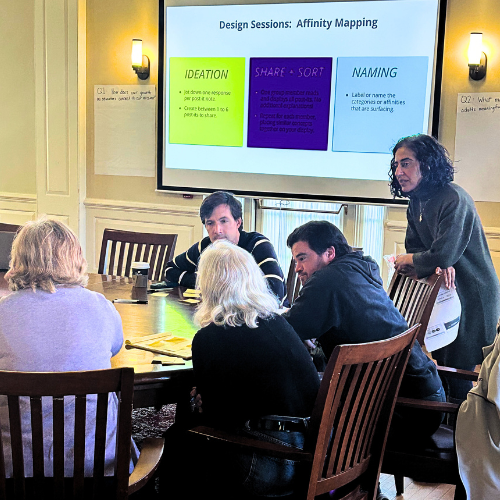
When I begin a partnership with an independent school, I offer a faculty growth assessment as our first step.
This process ensures that your school is clear about the problem it is trying to solve before you invest time, energy, or trust in change. It also provides a baseline to measure future performance.
In this initial phase, I focus on understanding how faculty growth is functioning within the unique culture, structures, and constraints of your school, rather than against a generic model of best practices.
By taking the time to look closely, I help your leadership team accurately frame your faculty growth challenges.
This assessment positions your school to pursue next steps that are thoughtful, strategic, and responsive to your school’s reality.
A Clear, Structured Process

Clarify the Focus & Scope
We begin by working with school leaders to clarify the focus and scope of the assessment, align on priorities, and establish shared understanding so the work ahead is purposeful, relevant, and grounded in your school’s context.

Conduct the Assessment
I design and carry out a thoughtful assessment process that may include document review, survey design, and data analysis, ensuring findings reflect the lived experience of faculty and the realities of your school’s structures and practices.

Share Findings & Insights
Findings are synthesized and shared in a clear, accessible way, supporting leadership teams as they make sense of the data, identify priorities, and plan next steps with confidence and alignment.
Frequently Asked Questions
-
No. This work is not an evaluation of individual faculty members. The focus is on understanding how faculty learning is structured and experienced across the school, not on judging individual performance. The goal is to surface patterns, strengths, and gaps in systems and practices.
-
Equity-informed practice is woven throughout the assessment process. This includes attending to how bias can shape observation, interpretation, and decision-making, and designing tools and questions that support fair, reflective, and consistent understanding of practice across faculty. The goal is not evaluation or compliance, but clearer judgment and shared responsibility for learning across difference.
-
The timeline varies based on scope and school context. The work is designed to be thoughtful and proportional—allowing enough time to gather meaningful insight without creating unnecessary burden.
-
Schools receive a written diagnostic report that summarizes strengths, tensions, and areas for growth, identifies root causes behind stuck points, and offers research-informed recommendations for next steps.
-
Yes. Findings can be adapted into presentations for different audiences, including board presentations or faculty sessions, with slide decks and facilitated conversations as appropriate.
More questions?
If you have a question that isn’t addressed here or want to explore whether this work is a good fit for your school I’m always happy to connect.
Feel free to reach out, and we can talk through what you’re navigating and what support might be most helpful.
Email: indu@door21consulting.com

Clarity is the starting point.
Without a clear understanding of how faculty learning is currently functioning, schools often rely on assumptions, uneven practices, and fragmented approaches to professional learning.
What might shift at your school if faculty learning were grounded in a shared, evidence-based understanding rather than shaped by isolated initiatives or anecdotal feedback?
With clarity about current practice in place, leaders are better positioned to focus their efforts, align priorities, and move forward with confidence and intention.