Train Instructional Leaders
BUILD LEADERSHIP CAPACITY TO SUPPORT FACULTY LEARNING
Equip instructional and academic leaders with the skills, language, and confidence to support meaningful faculty learning.

Shared Language

Skilled Judgment

Professional Trust

Instructional leadership often rests with department chairs, division heads, and administrators, but these roles don’t always share an aligned approach for supporting faculty growth.
Without a cohesive framework for observation, coaching, and growth conversations, feedback can vary widely, leaving faculty with mixed messages about what good teaching looks like and delaying input until concerns arise.
Over time, this pattern ends up feeling high-stakes rather than developmental, reducing trust and slowing growth.

When Feedback and Coaching Aren’t Aligned
What This Work Strengthens

-
Leaders learn to observe practice using shared frameworks, distinguish evidence from interpretation, and talk about teaching and learning with greater consistency so faculty receive clearer, more aligned messages about what good teaching looks like.
-
Leaders develop the ability to see practice clearly, surface assumptions, and calibrate their interpretations with others—strengthening professional judgment so feedback is grounded in evidence rather than intuition or prior experience.
-
Leaders learn how to give actionable, purpose‑aligned feedback and navigate difficult conversations in ways that lower defensiveness, deepen reflection, and support faculty growth as a developmental process rather than a high‑stakes event.
Research-Based Leadership Development
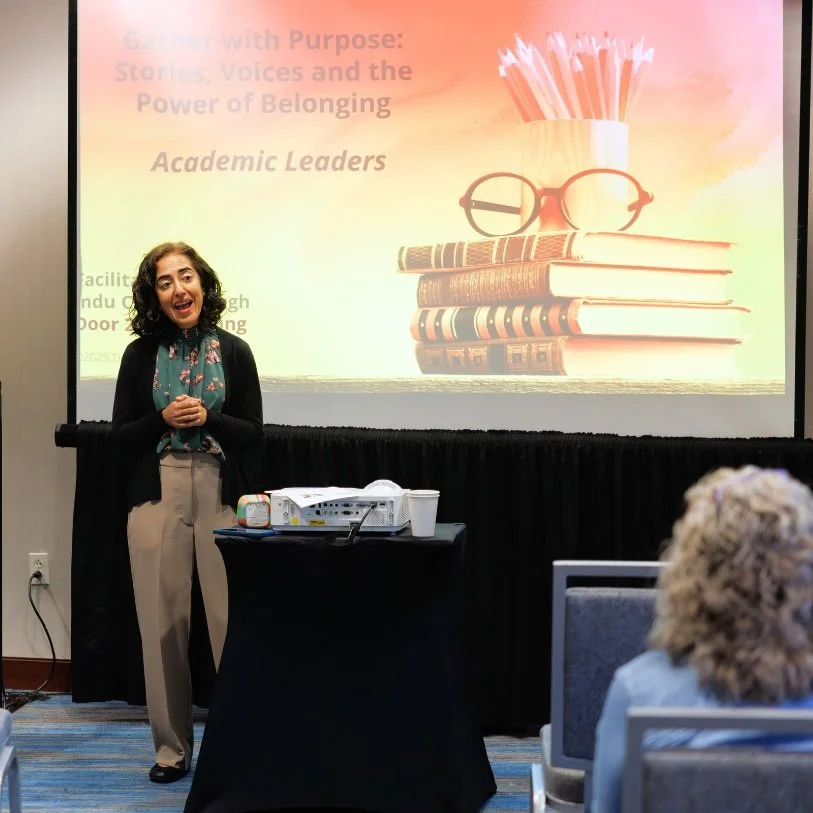
My work with instructional leaders is grounded in research and reflection, guided by your school’s priorities and culture. I help leaders build practical skills in observing instruction, giving feedback and facilitating professional conversations.
Leaders strengthen these skills through guided practice and coaching from me, based on the specific feedback challenges they are navigating with colleagues. Over time, schools develop more consistent, timely feedback for faculty and clearer expectations for teaching and learning across the school.
My approach blends more than 20 years of leading faculty development in independent schools with advanced research on adult learning and organizational change, supporting leadership practices that make faculty learning more visible, meaningful, and connected.
How the Work Unfolds

Clarify the Focus & Scope
We begin by working with school leaders to clarify who the instructional leaders are in your context, identify leadership priorities, and align on what effective instructional leadership support should look like so the work ahead is purposeful, relevant, and grounded in your school’s culture.

Develop Leadership Capacity
I design and facilitate leadership learning that strengthens observation, feedback, and facilitation skills, building shared language and usable tools so leaders can support faculty learning in consistent, thoughtful ways across the school.

Apply & Refine Practice
Leaders apply the learning in real situations, reflect on what they’re noticing and how conversations are landing, and refine their approach over time so feedback becomes clearer, trust is strengthened, and leadership practice becomes more effective and sustainable.
Frequently Asked Questions
-
Most engagements are designed as a partnership over time rather than a one-off experience. While the scope varies based on a school’s needs, the work often unfolds over several months to allow for meaningful learning, reflection, and adjustment.
-
Equity-informed practice is woven throughout this work. Observation, feedback, and learning conversations attend to common forms of bias—such as confirmation bias and saliency bias—as well as how race, gender, experience, and identity shape how teaching is seen and discussed. The goal is to support more careful, fair, and reflective judgment in everyday leadership practice.
-
Yes. Coaching can be added to support leaders more directly through one-on-one conversations, opportunities for observation and feedback, and troubleshooting real situations as they arise. This support is typically structured as a set number of additional hours and can be tailored to individual leaders or small groups.
-
These elements are not always included by default, but retreats, planning days, and end-of-year reflection sessions can be incorporated when they support a school’s goals and timing.
-
In independent schools, leaders often move into roles where they supervise colleagues with whom they have longstanding relationships. This work helps leaders surface assumptions, check personal narratives, and develop more professional, growth-oriented approaches to feedback—while honoring the relational culture that is central to independent schools.
More questions?
If you have a question that isn’t addressed here or want to explore whether this work is a good fit for your school I’m always happy to connect.
Feel free to reach out, and we can talk through what you’re navigating and what support might be most helpful.
Email: indu@door21consulting.com

Leadership shapes learning.
Without intentional development, instructional leadership can feel uneven, dependent on individual experience rather than shared understanding, and inconsistent in how faculty learning is supported.
What might shift at your school if instructional leaders had a shared language, clearer judgment, and the support to engage faculty learning more purposefully?
With leadership capacity strengthened, feedback becomes more coherent, learning conversations deepen, and faculty growth is more likely to influence practice in meaningful ways.